Gynecologist FAQs in New York, NY
Clear, honest answers about annual exams, hormones, menopause, and sexual health, so you can walk into your visit feeling informed instead of anxious.
No Question Is Too Small, or Too Personal
If you're looking through gynecologist FAQs in New York, NY, something is probably on your mind. Maybe it's a symptom you've been quietly putting up with, a question about hormones you weren't sure who to ask, or simply what happens at a first appointment. You're not alone, and your questions deserve real answers.
At Dr. Mark P. Gold, MD, the conversation always comes first. Below you'll find the questions women ask most often, from annual exams and contraception to bioidentical hormones, menopause, and sexual health. Read what helps, skip what doesn't, and bring everything else to your visit. Nothing you ask here will be considered embarrassing.
Find Answers by Topic
Your Gynecology Visit
What happens at an annual exam, how to prepare, and how often to come in.
Hormones and BHRT
Straight talk about bioidentical hormones, Biote® pellets, and safety.
Menopause and Midlife
Why brain fog, hot flashes, and poor sleep happen, and what can help.
Sexual and Pelvic Health
Dryness, bladder leaks, low libido, and what to know about ThermiVa.
In-Office Procedures
Colposcopy, LEEP, hysteroscopy, ultrasound, and how to prepare.
Booking and Contact
How to schedule, reach the office, and plan your first visit.
What to Expect at Your Gynecologist Appointment
Knowing what's coming makes everything feel easier.
A typical gynecologist appointment in New York City starts with a conversation about your health history, menstrual cycle, and any symptoms or concerns, followed by an exam that may include a breast exam, a pelvic exam, and a Pap test if you're due. With Dr. Mark P. Gold, a Board Certified OB-GYN, you see the same physician at every visit, which makes it easier to talk openly about periods, contraception, hormones, and sexual health. If something needs a closer look, tests such as an ultrasound can often be done in the office. You're always welcome to ask for each step to be explained before it happens.
How often should you come in? For most women, a yearly well-woman visit is a good rhythm, even in years when a Pap test isn't due. The annual exam covers far more than cervical screening, including breast health, bone health, contraception, and any changes you've noticed since last year.
Before you arrive, jot down your questions, note the first day of your last period, and bring a list of your medications and supplements. Feeling nervous? Say so. You set the pace, and nothing happens without your okay.
Your Questions About Hormones and BHRT
It's not just in your head, and it's not something you have to push through.

This isn't about turning back the clock. It's about helping you feel like yourself again.
Dr. Mark Gold is a certified Bioté provider.

Exhausted no matter how much you sleep? Foggy, irritable, or simply not yourself? Shifting levels of estrogen, progesterone, and testosterone can affect energy, mood, sleep, libido, and weight, often years before your final period. Bioidentical hormone replacement therapy (BHRT) uses plant-derived hormones that are molecularly identical to the ones your body makes. As a certified Biote® Provider, Dr. Gold builds each plan around your lab work, symptoms, and health history.
Is bioidentical hormone therapy safe?
Bioidentical hormone therapy can be a safe option for many women when it is prescribed after a thorough evaluation and monitored by a qualified physician. Much of the fear around hormone therapy traces back to research from the early 2000s that studied synthetic hormones. Later analyses have shown that for many healthy women who begin treatment before age 60 or within about ten years of menopause, the benefits can outweigh the risks. Bioidentical does not mean risk free, and a personal history of breast cancer, blood clots, or stroke matters a great deal. A careful review of your history, baseline lab work, and regular follow-up are what make hormone care responsible.
How long do Biote® pellets last?
Biote® hormone pellets typically last about three to four months for women, although timing varies from person to person. Each pellet is about the size of a grain of rice and is placed just under the skin of the upper hip during a short in-office visit, where it releases a steady, low dose of bioidentical hormones over time. Metabolism, physical activity, and stress can all influence how quickly your body uses the hormones. Follow-up lab work and honest conversations about how you're feeling help determine when your next insertion should be scheduled.
Menopause and Midlife: Signs Your Hormones May Be Involved
Many women live with these symptoms for years, assuming they're stress or simply part of getting older. You don't have to grit your teeth and get through menopause. If several of these sound familiar, a conversation and a simple blood test are a good place to start. Dr. Gold can also evaluate your bone health, since declining estrogen affects bone density.
Sexual and Pelvic Health, Including ThermiVa
Every woman deserves a comfortable, satisfying sex life.

Vaginal dryness, pain during sex, bladder leaks when you laugh or exercise, a libido that seems to have disappeared. These are some of the most common concerns women have and some of the least discussed. Many women silently tolerate problems that are very treatable. Dr. Gold approaches these conversations with discretion and without judgment, whether the right answer is hormone support, a urogynecology evaluation, or an in-office treatment such as ThermiVa.
What is ThermiVa recovery like?
ThermiVa recovery time is minimal for most women, who typically return to work and everyday activities right after a session. ThermiVa is a non-surgical radiofrequency treatment that gently warms vaginal and vulvar tissue to stimulate collagen and support improved tone, moisture, and sensitivity. Treatments are performed in the office without anesthesia, and most patients describe the sensation as a comfortable warmth. A series of sessions spaced several weeks apart is common, and your physician will give you specific guidance on resuming intimacy and on what results to realistically expect. Results vary from woman to woman, and improvement tends to build gradually over the course of treatment rather than all at once.
In-Office Procedures and Diagnostics
Hearing that you need a follow-up test can be unsettling. It helps to know that many common gynecologic procedures are performed right in Dr. Gold's office, with a physician who already knows your history, often in fewer appointments. Before anything is scheduled, he'll explain why it's recommended, what you'll feel, and how to prepare.
A magnified look at the cervix, often recommended after an abnormal Pap test.
A small tissue sample taken to check for abnormal cells.
A slim camera used to evaluate the inside of the uterus.
Imaging to evaluate the uterus, ovaries, and other pelvic organs.
Long-acting birth control placed or removed during an office visit.
Why Women Bring Their Questions to Dr. Gold
Caring for Women Since 1981
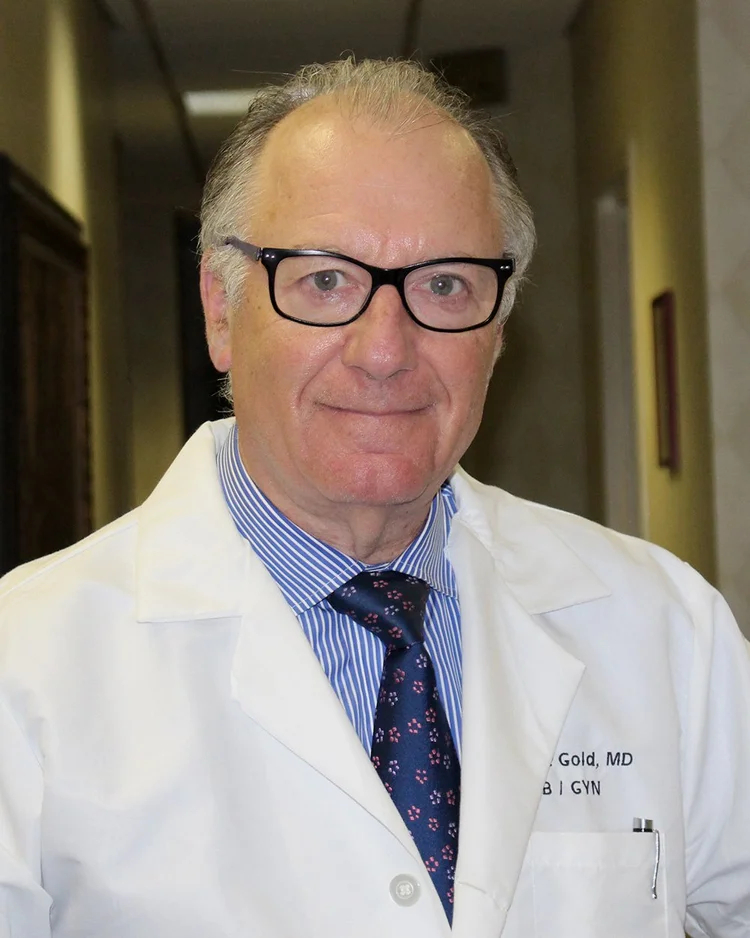
For more than four decades, Dr. Mark P. Gold, MD has been a steady presence in women's health in New York City, often caring for patients from their first exam through menopause.
One Physician, Every Visit
In this solo practice, you see Dr. Gold himself at every appointment. He knows your history and takes the time to get the details right.
Board Certified and Biote® Certified
Dr. Mark P. Gold is a Board Certified OB-GYN and a certified Biote® Provider, bringing focused training in bioidentical hormone therapy to every personalized plan.
Explore Related Care
Gynecology
Annual well-care exams, contraception, and problem-focused visits form the foundation of lifelong health. See what each visit includes and how Dr. Gold approaches your care.
Learn MoreHormone Replacement Therapy
Learn how BHRT and Biote® pellet therapy work. See how a personalized plan is built around your labs, symptoms, and goals.
Learn MorePelvic and Sexual Health
Explore ThermiVa, urogynecology care, and treatment options for dryness, bladder leakage, and low libido.
Learn MoreWeight Management
Find out how GLP-1 medications may fit into a medically supervised plan when midlife changes make weight harder to manage.
Learn MoreQuick Answers to Common Questions
Ready to Talk It Through?
Bring your questions, your symptoms, and your story. Dr. Mark P. Gold, MD offers private, personal visits in New York City for women at every stage of life. Please note that the practice does not accept insurance.
Contact the Office
If you are having a medical emergency, call 911 or go to the nearest emergency room.
Please don't send personal health information by email. The information on this website is for general education and is not a substitute for an individual medical evaluation. Hormone therapy and other treatments are recommended only after a personal consultation, and results vary from person to person.
The information on this page is for educational purposes and is not a substitute for an individual medical evaluation. Bioidentical hormone pellets are compounded medications and are not approved by the U.S. Food and Drug Administration. Hormone therapy is not appropriate for every patient, and individual results vary. All treatment decisions are made by Dr. Mark P. Gold, MD after a consultation and review of your health history.